Maintenance · 6 min read
The caravan maintenance checklist for every season
A practical caravan maintenance checklist for spring, summer, autumn and winter: tyres, brakes, seals, gas, water and electrics, and when to service.
On this page
Most expensive caravan repairs start as something small that nobody noticed: a cracked seal, a tyre left underinflated, a brake that was never adjusted. A short caravan maintenance routine through the year catches these early. This is the checklist we recommend, split by season, with notes on what you can do yourself and what is better left to a workshop.
Your caravan’s handbook comes first. Where it gives different intervals or settings, follow it.
Once a year: the full service and habitation check
An annual service at our workshop takes around four to six hours. A thorough service typically covers:
- brakes, hubs and wheel bearings
- coupling head, breakaway cable and hitch
- chassis, axle and suspension
- tyres, including age and condition
- road lights and 12 V electrics
- 230 V electrics and hook-up
- gas system and appliances
- water system, pump and heater
- a damp check around the body
- roof lights, windows, door and locker seals
In the UK the living-area part of this, covering gas, electrics, water and damp, is usually called a caravan habitation check.
Many insurers and manufacturers expect an annual service to keep warranties and cover valid, so keep the paperwork. If your caravan is stored with us, the easiest time to do it is just before you collect it for the season. See caravan repairs for what we cover.
Spring: before the first trip
This is the big one if the caravan has been standing for the winter.
Outside
- Walk around and look closely at the roof, corners, window surrounds and roof lights for cracks, lifting sealant or signs of water getting in.
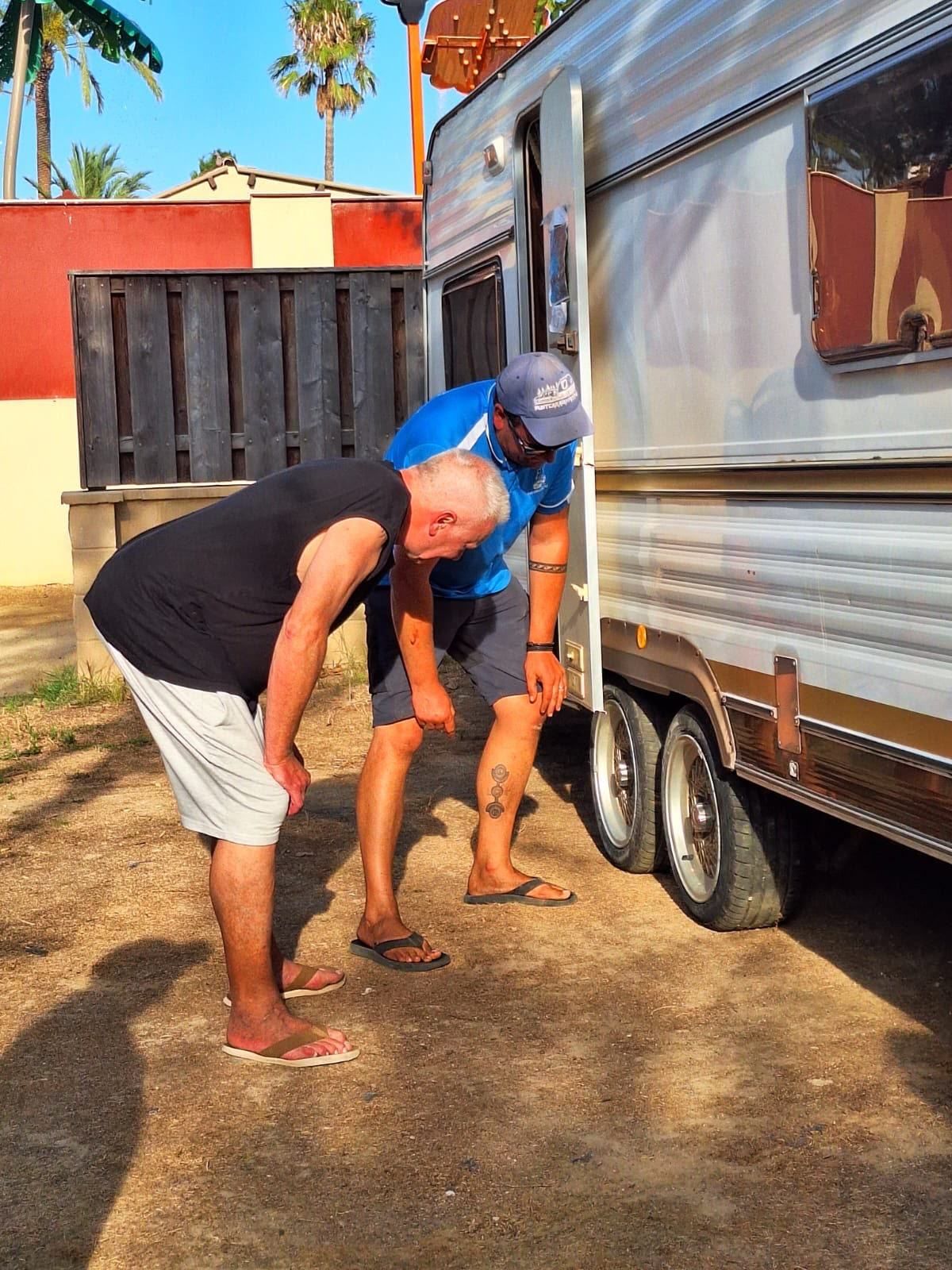
- Check tyres for pressure, cracking in the sidewalls and bulges. Find the four-digit date code on the sidewall; many manufacturers and caravan clubs advise replacing caravan tyres at around five years old whatever the tread looks like, because they age from standing rather than from wear.
- Check wheel nuts are tightened to the torque in your handbook.
- Test all road lights with the car connected: indicators, brake lights, sidelights, fog light and reversing light if fitted.
- Check the corner steadies wind up and down freely, and grease them if needed.
- Check the breakaway cable is in good condition and not frayed.
Inside
- Reconnect and charge the leisure battery, and check its terminals for corrosion.
- Refill and flush the water system. If it has been standing for months, a sterilising treatment designed for caravan water systems is worth using.
- Check for leaks under sinks, around the pump and at the water heater once the system is under pressure.
- Test the smoke alarm and carbon monoxide alarm, and replace batteries.
- Reconnect the gas and check for leaks with a suitable leak detection spray, never a flame. If anything smells of gas or does not light cleanly, stop and have it checked by a qualified engineer.
- Run the fridge, heater and hob to make sure they work on each fuel source.
Summer: while you are using it
Short checks, often:
- Tyre pressures before every journey, cold.
- Wheel nuts after the first 50 km or so on new or refitted wheels.
- Hitch and breakaway cable every time you couple up.
- Lights every time you couple up.
- Awning: dry it before packing whenever possible, and check poles and pegs for damage.
- Heat: in the Spanish summer, keep blinds partly closed when you are out and use shade where you can. Direct sun on windows and roof lights for weeks at a time shortens their life.
- Water: keep the fresh water turning over, and do not leave water sitting in the tank in high temperatures for long.
Autumn: end of the season
This is when you set the caravan up for months of standing still. Do it properly and spring is much easier.
- Clean inside and out, and deal with any marks before they set.
- Note anything that needs fixing, and book it in now rather than in spring when workshops are busiest.
- Drain the entire water system, including the heater.
- Empty food, liquids and the fridge.
- Charge and disconnect the battery.
- Turn off and disconnect the gas.
- Leave the handbrake off and use chocks.
Our full checklist for getting a caravan ready for storage goes through each of these in detail.
Winter: while it is in storage
Even a caravan in storage benefits from a little attention:
- If you can, have it checked after strong winds or heavy rain, especially if it is stored outdoors with a cover.
- Keep the battery charged, either by taking it home or through a solar controller.
- Check moisture traps and empty them if needed.
If the caravan is stored with us, tell us if you would like any work done before you arrive in spring. Having the service, a wash and any repairs done while it is already on site saves an extra trip.
Where you store it matters too
A caravan kept under a roof or indoors needs less attention to seals, windows and paintwork than one standing in the sun all year. If maintenance keeps coming back to the same problems, it may be worth looking at a different kind of pitch. We compare the options in indoor vs outdoor caravan storage, and prices are on storage pricing.
Book a service
To book a service, inspection or repair with Lars, call +34 632 56 13 75 or email info@punt-caravan-parking.com, or use the repairs form on our contact page. Lars speaks Spanish, German and English.