Maintenance · 5 min read
Your caravan awning on the Costa Brava:
pitching, tramontana wind, cleaning and storage
Caravan awning tips for the Costa Brava: pitching it, coping with sun and the tramontana, cleaning, drying before packing, winter storage and our prices.
On this page
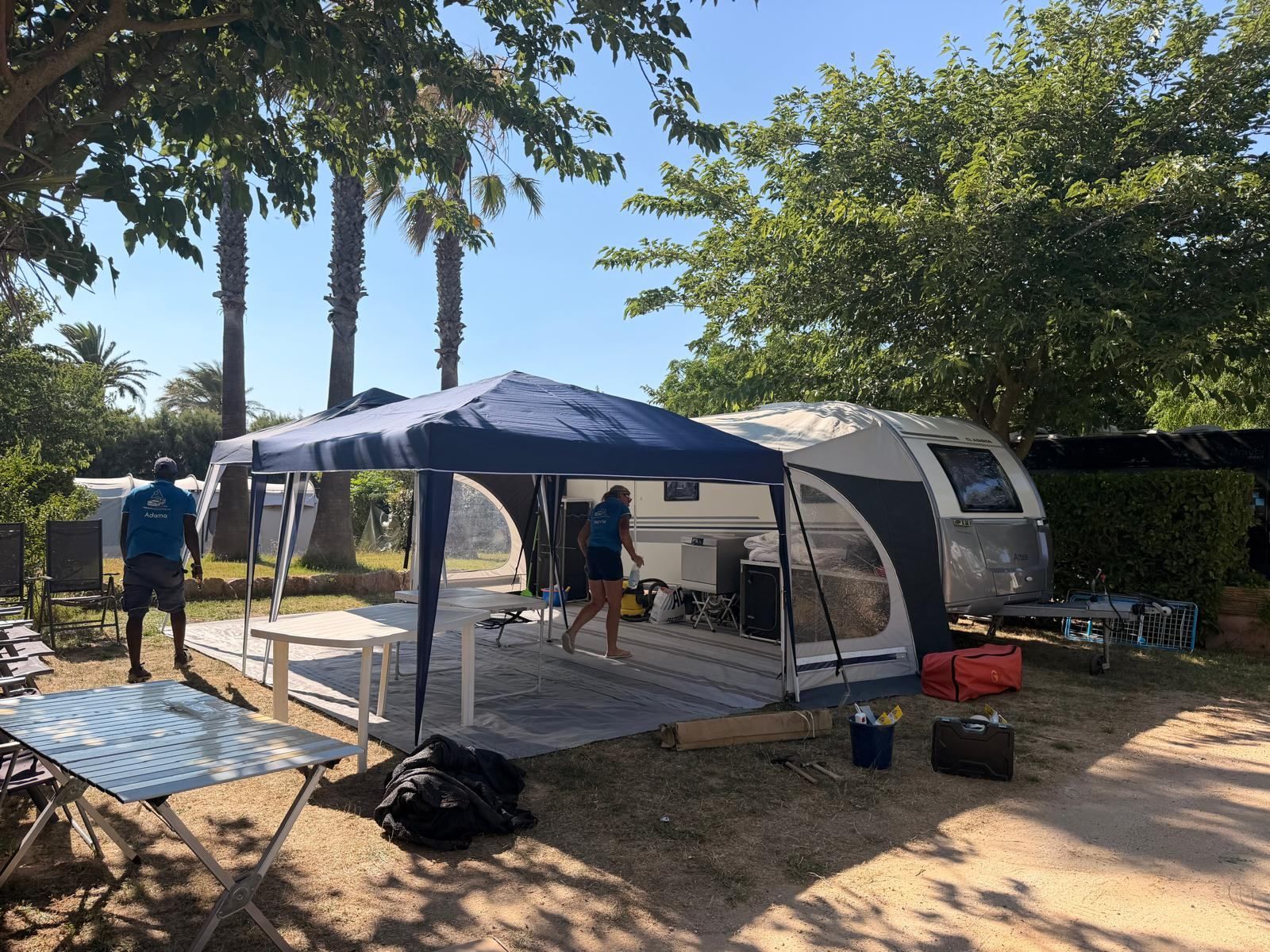
For most people who tow down to the Costa Brava, the caravan awning is where the holiday actually happens: breakfast, wet towels, bikes, the kids’ card games when it gets dark. It also takes more punishment here than almost anywhere else, from strong sun in summer to the northerly wind that sweeps across the Empordà plain. Here is what we have learned about looking after an awning around the Bay of Roses, and what we can do for you if you would rather not wrestle with it yourself.
Pitching on a Costa Brava campsite
Start by working out where the wind will come from. The tramontana blows from the north, so if your pitch allows it, park so the caravan stands between the north and the awning. The van then takes the first blast and the awning sits in its shelter. The trade-off is that a south-facing awning gets the sun for most of the day, so a sun canopy or a shaded pitch matters more.
The ground varies a lot. Pitches near the beach at Sant Pere Pescador or Empuriabrava are often soft and sandy, while pitches further inland can be hard and stony. Bring a mix of pegs: long sand pegs for loose ground and hardened rock pegs for compacted soil, plus a proper mallet. Standard thin pegs from the box rarely hold in either.
On the groundsheet: a breathable groundsheet lets the grass underneath survive, while a sealed plastic one can kill it in a week or two. Some campsites have rules about this, so check with yours before you lay anything down.
Living with the tramontana
The tramontana is a dry, cold northerly wind, and few places feel it as much as the Empordà. According to Spain’s state weather agency AEMET, it is far more common in winter, spring and autumn than in high summer, and an episode can last a few days. Gusts can be strong enough to bend poles and tear fabric on an awning that is not properly secured.
What helps:
- Check the forecast every day. The Catalan weather service Meteocat publishes wind warnings for the Alt Empordà.
- Fit storm straps over the roof of the awning and peg them down firmly.
- Close it up. An awning with the front panel open catches wind like a sail. With the doors zipped shut it is far more stable.
- Tension everything again after the first gusts. Pegs work loose in sand quickly.
- Take it down early. If strong gusts are forecast, lower the awning while it is still calm. Trying to take it down in a full tramontana is how poles break and people get hurt.
- Roll-out canopies fixed to the caravan should always be wound in when the wind picks up and when you leave the pitch.
Inflatable (air) awnings cope with wind better than many people expect, because the air tubes flex instead of snapping, but they still need every strap and peg in place.
Sun, heat and UV
Months of Spanish sun are hard on fabric. UV light fades colours, weakens stitching and makes clear PVC windows brittle and cloudy. Keep the window covers closed when you are away from the pitch, and air the awning well so condensation does not build up on cooler nights. With an air awning, check the pressure: tubes inflated in the cool of the morning gain pressure as the day heats up, so follow the manufacturer’s figure and do not overinflate.
Cleaning your awning
Salt spray, sand, pine resin and dust from the dry fields all end up on the fabric. Clean it at the end of the season rather than putting it away dirty:
- Let it dry, then brush off sand and dust with a soft brush.
- Wash with lukewarm water and a mild cleaner made for tent fabric. Avoid washing-up liquid and household detergents, which strip the water-repellent finish.
- Do not use a pressure washer on the fabric or the seams.
- Rinse thoroughly and clean sand out of the zips with an old toothbrush.
After a few seasons the fabric no longer beads water. That is the point to reproof (impregnate) it.
Dry it properly before you pack it
This is the one rule that really matters. An awning packed even slightly damp can develop mildew within days, and black spots in the fabric rarely come out completely. Morning dew counts as damp too, so wait until the fabric, the seams and the underside of the groundsheet are fully dry before you fold anything.
If you have no choice but to pack up wet, unpack it and dry it out as soon as you possibly can. Fold the awning loosely, keep the poles clean and dry, and put everything back in its bag.
Storing the awning over winter
Store the awning clean, completely dry and in a ventilated place where mice cannot get at it. Lay the bag flat rather than standing it on end, and keep it off cold concrete floors. If you leave it in the caravan while it is stored, it must be bone dry, as damp trapped inside a closed van over winter is exactly what you want to avoid. Our winterising checklist on the blog covers the rest of the caravan.
Our awning services
If you would rather leave it to us, we put up, take down and clean awnings. Prices include 21% VAT.
| Service | Storage customers | Non-customers |
|---|---|---|
| Awning assembly | €133 | €186 |
| Awning disassembly | €113 | €126 |
| Awning cleaning | Price |
|---|---|
| Standard cleaning | €86.52 |
| Special cleaning (impregnation and zips) | €133 |
The special clean includes reproofing the fabric and treating the zips, which is worth doing on an awning that has spent a few summers on the coast. If the wind has bent an awning rail or damaged the canopy mechanism on your caravan, our caravan repairs team can take a look. If our transport service is bringing your caravan from the yard to the campsite, ask us about doing the awning at the same time.
Get in touch
Tell us which awning you have, where your caravan is and when you need it done, and we will plan it in. Send us a message through our contact page, or see all our extras on the additional services page.